- The AI Furnace
- Posts
- AI Furnace Newsroom: OpenAI and Apple Go Head-to-Head in AI Hardware, Anthropic Poised to Raise $25B, Davos AI Takeaways, Google’s Agentic Commerce Play, Google Personal Intelligence
AI Furnace Newsroom: OpenAI and Apple Go Head-to-Head in AI Hardware, Anthropic Poised to Raise $25B, Davos AI Takeaways, Google’s Agentic Commerce Play, Google Personal Intelligence
The AI Furnace weekly newsletter. Your destination for the latest news, innovations, opportunities, and product launches in AI.

AI Furnace
January 27, 2026

In partnership with

Welcome to this week’s AI Furnace Newsroom
In today’s insights we cover:
OpenAI and Apple Go Head-to-Head in AI Hardware
Anthropic Poised to Raise $25B
Davos AI Takeaways: The Real Race is Diffusion, Not Demos
Google’s Agentic Commerce Play: Make Checkout a Protocol
Google Personal Intelligence: Search Becomes “About You,” Not the Web
Read time: 5 mins
💡 Furnace Insights
OpenAI / Apple

OpenAI has confirmed the release of its first hardware device built with Jony Ive’s team set to be revealed in the second half of 2026. Reports hint that it will center on audio, with OpenAI building stronger voice and sound models ahead of release. Apple, meanwhile, is reportedly prototyping an AirTag sized AI wearable ‘pin’ with cameras and microphone, aimed for a possible 2027 launch. Apple is moving fast to line up with OpenAI’s 2026 wearable, after Humane’s AI Pin sold poorly.
“AI hardware” is quickly splitting into two paths: OpenAI is trying to build a new interface where voice and ambient assistance become the default, while Apple is leaning into sensor-rich context (camera & mic) that can power “just look and ask” interactions. The hard part for both is not model quality, it’s the boring constraints that killed earlier attempts: battery/heat, social acceptance, privacy optics, and getting users to wear something every day.
Apple’s advantage is distribution and industrialization; OpenAI’s advantage is owning the assistant experience end-to-end and iterating faster outside legacy product cycles.
Anthropic

Anthropic is reportedly discussing a fundraising that could exceed $25B and value the company around $350B, more than doubling its valuation from just a few months earlier, with Sequoia Capital reported as a new participant alongside other major investors. This comes days after Anthropic announced the launch of Claude Cowork, an AI assistant for non-technical knowledge workers that emulates the style of Claude Code.
Markets are still underwriting a “winner-take-most” outcome for frontier labs, even as the rest of the ecosystem pushes toward efficiency and application-layer differentiation. A raise at this level increases expectations: Anthropic has to translate momentum (agents, enterprise adoption, developer tooling) into repeatable revenue and defensible distribution, while also keeping safety and reliability ahead of regulatory and enterprise scrutiny.
Davos

At Davos, the shared theme across leaders was that we are moving from “capability wow” to “systems and adoption.” Satya Nadella (CEO, Microsoft) warned that AI’s boom risks looking like a bubble if benefits don’t spread beyond big tech and wealthy regions, emphasizing diffusion of AI into industries and practical rollout. Larry Fink (CEO, BlackRock) framed the investor angle similarly: the cycle fails if value concentrates, and succeeds if AI becomes broadly deployed across the real economy.
Where the debate sharpened is what “frontier” progress actually means. Demis Hassabis (CEO, Google DeepMind) pushed the idea that AGI is not just benchmarks, but the hard work is systems that can discover, test, and validate in the real world (especially in science). Dario Amodei’s (CEO, Anthropic) framing, by contrast, is that the key thing is the feedback loop: once AI meaningfully writes software end-to-end and accelerates AI research, timelines compress and the constraints become compute, training time, and deployment speed.

Google launched the Universal Commerce Protocol (UCP), an open standard that will make it seamless for Gemini app users to purchase anything online - making “agentic shopping” reliable across retailers, platforms, and payment flows.
Google has partnered with major retailers like Walmart and Shopify for this beta launch, but they’re hoping to scale this service aggressively.

Google is rolling out Personal Intelligence to AI Mode in Search, letting users opt in to connect Gmail and Google Photos so responses can use personal context (bookings, emails, trips, purchases, photo memories) rather than generic answers. It’s rolling out first to AI Pro and AI Ultra subscribers in the U.S., running on Gemini 3, and Google emphasizes it does not train directly on Gmail/Photos data.
The result is that AI Mode can spot your travel plans from Gmail, your favourite brands from purchase emails, and your photo memories, then use that to give suggestions without you spelling all that out again.
📈 AI Venture Deals of the Week
Level3AI, an enterprise customer-service AI assistants company, raised its $13 million seed round.
Inferact, a high-performance LLM inference engine (vLLM) developer company, raised its $150 million seed round.
Cloudforce, a regulated-industry AI platform on Azure company, raised its $10 million Series A.
Neurophos, a photonic AI inference chip company, raised its $110 million Series A.
Flip, a voice AI automating enterprise customer-service calls company, raised its $20 million Series A.
WitnessAI, an AI security and governance platform company, raised its $58 million strategic funding round.
⚒️ New AI Product Launches You Don’t Want to Miss
Apple to release Gemini-powered Siri, a next-gen Siri upgrade using Google Gemini to complete tasks using personal/on-screen context tool.
Clawdbot, an open-sourced personal AI assistant that clears inbox, sends emails, and manages calendar from chat apps, and many more.
Microsoft Research released Rho-alpha, a vision-language-action+ robotics model that turns natural-language commands into robot control signals (incl. tactile sensing).
Cursor released subagents that run parts of an agent task in parallel for faster execution and better context usage.
Tasklet, a business-process automation AI agent that connects to your tools/APIs (incl. MCP and computer-use) via plain English.
Upcoming Events 📅
AIF Founder Supper Club @ Wine Bar - Wednesday, February 18
AIF Founder Supper Club @ Private Room - Tuesday, March 24
Interested in meeting the Who’s Who of AI?
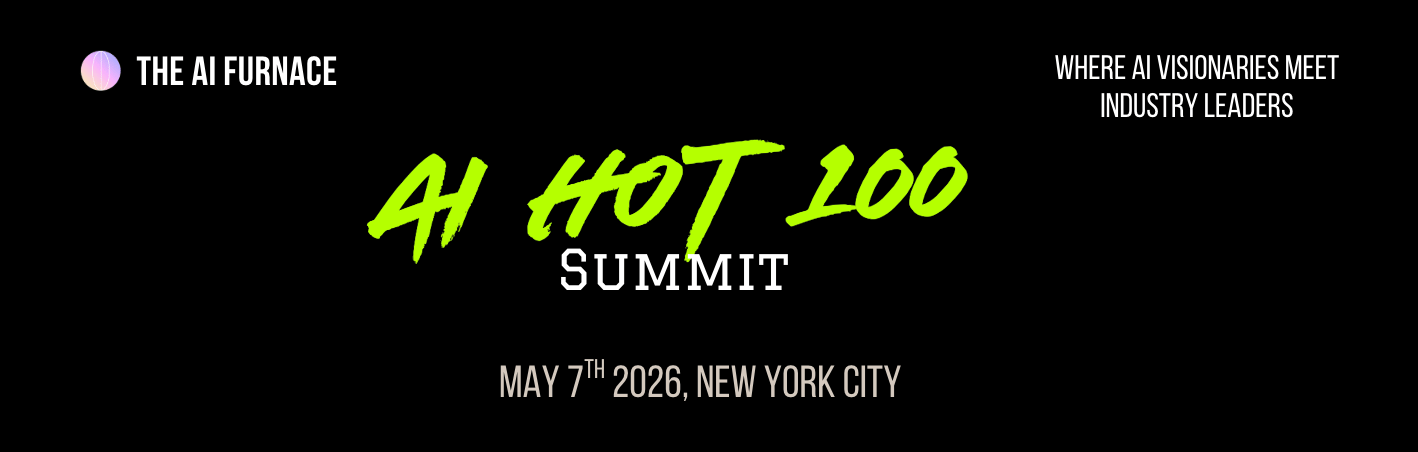
The AI Hot 100 Summit is back for its third edition on May 7th, 2026 in New York City. The only AI Summit built for real connections where AI Visionaries meet Industry Leaders. Join over 500 AI Executive Leaders, Founders and Investors for a jam packed day of enterprise AI lightning talks, innovation showcases, and curated networking.
Get ready to meet and greet speakers and attendees from OpenAI, NVIDIA, Haleon plc, Legora, Anthropic, Cursor, Eleven Labs, Adobe, Walmart, Insight Partners & more.
🗓️ May 7, 2026
📍New York City
📢 Want to partner? Reach out to get your brand in front of 25k+ AI executives, entrepreneurs, researchers, investors, and AI leaders.