- The AI Furnace
- Posts
- AI Furnace Newsroom: Anthropic Releases Claude Opus 4.7, Anthropic’s Claude Design Launch, Washington Gets its Hands on Mythos, Allbirds Pivots to “NewBird AI”, Meta Superintelligence Launches Muse Spark
AI Furnace Newsroom: Anthropic Releases Claude Opus 4.7, Anthropic’s Claude Design Launch, Washington Gets its Hands on Mythos, Allbirds Pivots to “NewBird AI”, Meta Superintelligence Launches Muse Spark
The AI Furnace weekly newsletter. Your destination for the latest news, innovations, opportunities, and product launches in AI.

AI Furnace
April 21, 2026

In partnership with
Welcome to this week’s AI Furnace Newsroom
In today’s insights we cover:
Anthropic Releases Claude Opus 4.7, the “Safer” Frontier Model, While Keeping Mythos Locked Down
Anthropic’s Claude Design Launch Shows where “Design Tools” are Heading
Washington Gets its Hands on Mythos Despite Anthropic Fallout
Allbirds Pivots to “NewBird AI”
Meta Superintelligence Launches Muse Spark, Positioning itself to Catch up with Anthropic and OpenAI
Read time: 5 mins
💡 Furnace Insights
Anthropic
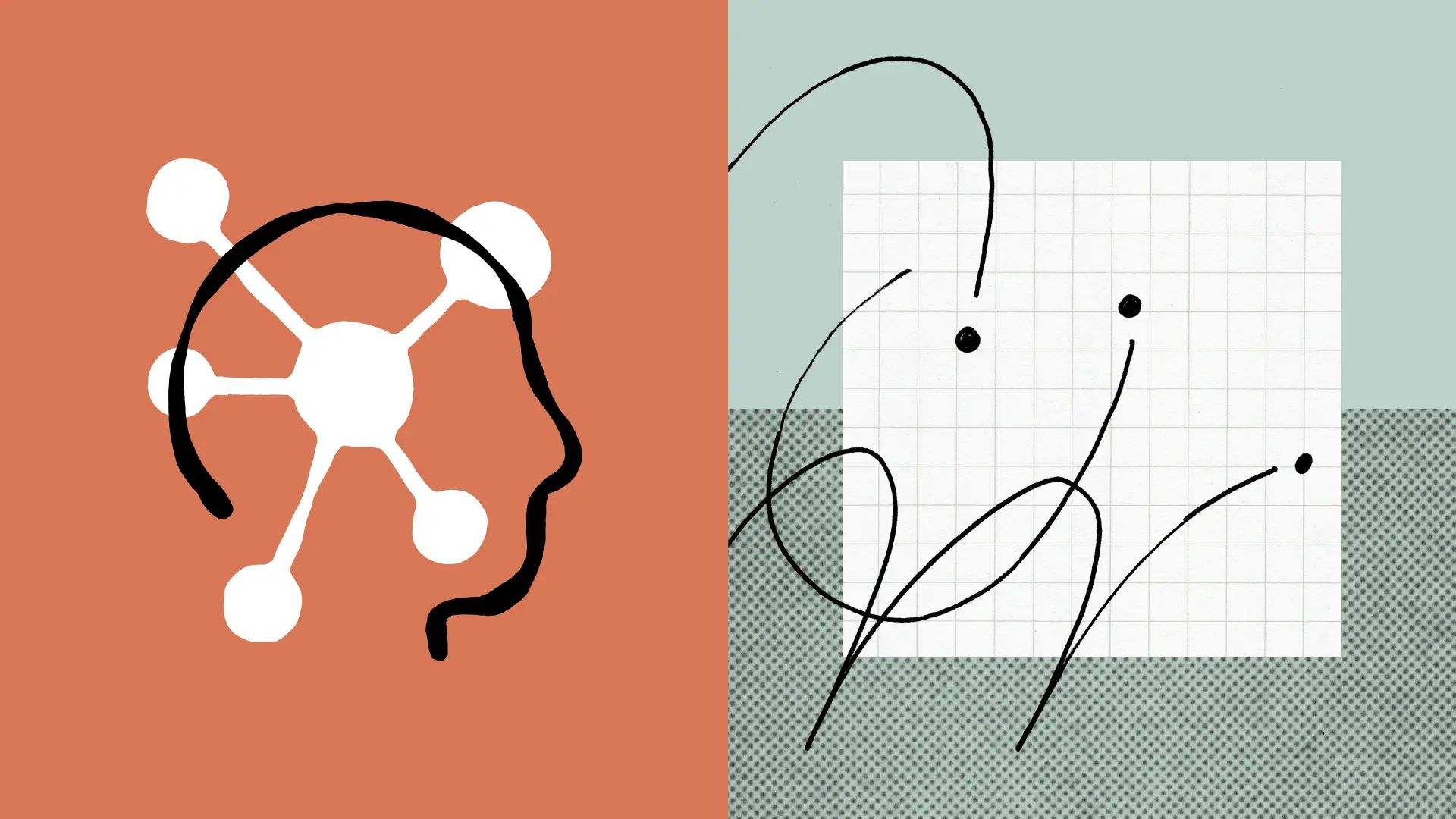
Anthropic has released Claude Opus 4.7 as its most powerful generally available model, with improvements in coding, instruction-following, and longer real-world work. But the bigger story is what it did not release: Mythos Preview, the stronger model Anthropic says remains restricted to selected partners under Project Glasswing because of its unusually advanced cyber capabilities. Anthropic says Opus 4.7 includes automated safeguards for high-risk cybersecurity requests and that its cyber abilities were deliberately reduced relative to Mythos.
That is a meaningful shift in how frontier labs are behaving. For most of the last two years, the rule was simple: ship the best model you have. Anthropic is now making the opposite argument, that some capabilities are too risky for broad release before the controls are ready. That turns model launches into policy decisions as much as product decisions, and it hints at a future where the frontier splits in two: the public tier everyone can use, and the locked-away tier that only governments, banks, and carefully chosen partners ever see.
Anthropic
Anthropic has launched Claude Design, a research-preview product that lets users create slides, prototypes, one-pagers, and other visual work by describing what they want in plain language. It runs on Claude Opus 4.7, supports exports to PDFs, PPTX, links, and Canva, and Anthropic says it can also learn from a team’s design system so outputs stay closer to the brand.
The point is not that designers disappear tomorrow. It is that design is starting to behave like writing did once chat models got good: a specialist workflow begins collapsing into conversation. That matters most for founders, PMs, and operators who do not need perfect craft on the first pass, they need something usable fast. As more creative work moves into prompt-driven tools, the scarce skill shifts from “can you open the software?” to “can you direct taste, judgment, and iteration well enough to get something people actually want”.
White House

The White House is reportedly preparing access to a modified version of Anthropic’s Mythos model for federal agencies, with the Office of Management and Budget setting guardrails before broader rollout. That is notable because Mythos sits inside Project Glasswing, Anthropic’s tightly controlled cybersecurity initiative, and because the company has already been in a public clash with the Pentagon over military uses and safety boundaries.
What makes this story interesting is the contradiction: one part of government treats Anthropic as difficult because it insists on limits, while another part still wants the model badly enough to move forward. That tells you something about where AI is heading inside the state. Once a system becomes valuable for cyber defense, procurement logic starts to overpower the earlier political fights.
Allbirds
Allbirds has sold its footwear brand assets, kept the public shell, and said it plans to rename itself NewBird AI and pivot into GPU-as-a-Service and AI cloud infrastructure. The company also announced a $50 million convertible financing facility to acquire GPU assets and build out what it calls an AI-native cloud platform. The market loved the headline at first: Bloomberg reported the stock surged dramatically after the announcement.
There is a serious theme underneath the absurdity. GPU scarcity and AI infrastructure demand are real, and almost any public company can now try to draft behind that trend. But that is exactly why this story sets off bubble alarms. When a struggling consumer brand can shed its original business, buy some AI language, and get re-rated by the market overnight, it becomes harder to tell where genuine infrastructure building ends and financial theater begins.
Meta
Meta Superintelligence Launches Muse Spark, Positioning itself to Catch up with Anthropic and OpenAI
Meta unveiled Muse Spark, the first model from Meta Superintelligence Labs, presenting it as a meaningful rebuild of its AI stack and a sign that the company is trying to close the gap with OpenAI, Anthropic, and Google. At the same time, Meta expanded its infrastructure relationship with CoreWeave through a new $21 billion agreement running through 2032, on top of prior commitments, to secure dedicated AI cloud capacity.
Taken together, those two moves say the same thing: Meta is no longer treating AI as just another product layer inside Facebook, Instagram, and WhatsApp. It is treating it like a platform war that requires new models and massive external compute at the same time. Muse Spark may help on the product side, but the CoreWeave deal is the louder signal. Catching up in AI is no longer just about talent or benchmarks. It is about how much compute you can lock down before everyone else does.
📈 AI Venture Deals of the Week
Factory, an AI coding agents platform for enterprise engineering teams, raised its $150M Series C.
Loop, a full-stack AI platform for logistics and supply chain operations, raised its $95M Series C.
Hilbert, an AI platform for automating growth and business decisions, raised its $28M Series A.
ActionAI, a reliable AI infrastructure platform for enterprise automations and business intelligence, raised its $10M Seed.
Spektr, an AI infrastructure platform for financial services compliance, raised its $20M Series A.
Gizmo, an AI-powered learning and study platform, raised its $22M Series A.
⚒️ New AI Product Launches You Don’t Want to Miss
OpenAI released Codex for (almost) everything, an expanded agentic coding product for handling a broader range of software tasks.
OpenAI released the next evolution of the Agents SDK, an updated developer toolkit for building and orchestrating AI agents.
Google released Gemini 3.1 Flash TTS, a more natural and controllable text-to-speech model for developers and enterprises.
Perplexity launched Personal Computer, a Mac-native AI agent that can work across local files, native apps, and desktop workflows.
Upcoming Events 📅
AIF Founder Supper Club @ Private Room - Tuesday, April 14
Interested in meeting the Who’s Who of AI? Join the AI Hot 100 Summit in NYC

The AI Hot 100 Summit is back for its third edition on May 6-7th, 2026 in New York City. The only AI Summit built for real connections where AI Visionaries meet Industry Leaders. Join over 500 AI Executive Leaders, Founders and Investors for a jam packed 2 days of enterprise AI lightning talks, innovation showcases, and curated networking.
Get ready to meet and greet speakers and attendees from OpenAI, NVIDIA, Haleon plc, Legora, Anthropic, Cursor, Eleven Labs, Adobe, Walmart, Insight Partners & more.
🗓️ May 6-7, 2026
📍New York City
📢 Want to partner? Reach out to get your brand in front of 25k+ AI executives, entrepreneurs, researchers, investors, and AI leaders.