- The AI Furnace
- Posts
- AI Furnace Newsroom: Anthropic's Claude Opus 4.6 Spells Economic Impact, SaaS Industry Under AI Fire, Big Tech’s $650B Compute Spend
AI Furnace Newsroom: Anthropic's Claude Opus 4.6 Spells Economic Impact, SaaS Industry Under AI Fire, Big Tech’s $650B Compute Spend
The AI Furnace weekly newsletter. Your destination for the latest news, innovations, opportunities, and product launches in AI.

AI Furnace
February 10, 2026

In partnership with
Welcome to this week’s AI Furnace Newsroom
In today’s insights we cover:
Anthropic’s Claude Opus 4.6 Spells Economic Impact
SaaS Under AI Fire as Anthropic Launch Triggers Trillion-Dollar Selloff
Big Tech’s $650b Capex Year: The AI Race Becomes A Utilities Race
SpaceX Absorbing xAI Creates $1.25T Entity with “Space Compute” As The Endgame
OpenAI’s Answer to Claude Code - Launching the Codex App
Goldman X Anthropic: Agents Are Moving Into Regulated Back-Office Work
Read time: 5 mins
💡 Furnace Insights
Anthropic

Anthopic’s Claude Opus 4.6 release represents a significant leap forward in real-world work, being able to plan longer agentic tasks and handle large codebases with more consistency given the 1M token context window. The “Agent Teams” feature also means users can now tackle complex tasks by leveraging multiple AI agents working in harmony.
The model came out on top on the APEX-Agents leaderboard, solving 20 tasks that no agent has ever been able to complete before. This benchmark demonstrates it's ability to create real deliverables such as slide decks, documents, financial models in consulting, law, and banking. It requires navigating complex data rooms with hundreds of files in Google Workspace.
The potential economic impact of Opus 4.6 is immense, as the focus shifts from whether the model can reason, to its ability to digest vast amounts of information and deliver usable results.
Anthropic

Anthropic’s latest Claude upgrade which entailed industry-focused plugins shook the markets, as investors questioned how safe traditional enterprise software is in an AI-first world. Investors briefly priced in the risk that AI agents are going to replace knowledge work tasks - leading to roughly $1T wipeout in software and data stocks, with financial data providers hit the most.
This is exactly the kind of move that looks dramatic in markets, but slower in reality. While core systems are not going to vanish overnight, the margins around them (e.g., research, reporting, drafting, screening, workflow glue) are now directly attackable by general-purpose agents, which is where a lot of enterprise vendors quietly make money.
Big Tech

Alphabet, Amazon, Meta, and Microsoft have announced that they are collectively pouring $650B into AI infrastructure. Top players know that winning the AI race does not mean just building software anymore but fighting over power, chips, and construction capacity for data centres.
With spending up by about 60% year over year, owning the compute layer is seen as the path to long term dominance. The stock of these Big Tech companies tanked 6% initially, with investor anxiety leading to the four firms losing over $950B in market value after sharing these plans.
SpaceX

Musk’s rocket company SpaceX has acquired Musk’s AI company xAI into a combined ~$1.25T private entity, the highest valued private company to date. The acquisition was justified as a bet that terrestrial data centers will run into hard limits (power and cooling), and that space-based infrastructure (solar-fed, globally networked) could be the long-term scaling path for AI - with Musk linking AI development directly to space-based compute.
Even if “data centers in space” is years out, the near-term signal is that AI roadmaps are now colliding with energy and infrastructure constraints so directly that companies are reaching for extreme answers.
OpenAI

OpenAI released a native macOS app for Codex focused on parallel, agent-led coding which builds on top of GPT-5.2-codex - a move to win back users that migrated to Claude Code. The desktop app turns your Mac into a "command center for agents," letting developers run multiple AI coding agents in parallel across different projects, each capable of working independently for up to 30 minutes before returning finished code.
This is aimed at one thing: making agentic coding feel like a normal part of the dev day, with multiple parallel agents, longer-running tasks, and tighter integration into the way teams already ship software. OpenAI’s goal is winning the desktop “command center” that developers live in, especially as Apple starts letting AI agents operate inside Xcode itself.
Goldman Sachs

Goldman Sachs partnered with Anthropic to create Claude-powered agents that will streamline internal workflows for operations-heavy processes such as onboarding, KYC (Know Your Customer), and compliance tasks.
This collaboration is significant because the banking sector typically struggles with governance when it comes to "AI hype". This means that early successes for AI agents in enterprises are likely to be practical, controlled systems rather than flashy front-end chat interfaces. These systems aim to reduce the workload for teams while ensuring that accountability remains with human oversight.
📈 AI Venture Deals of the Week
Berget AI, a sovereign AI infrastructure startup, raised its €2.1M seed.
Adaption Labs, an AI systems-that-learn startup, raised its $50M seed.
Biorce, an AI clinical trials platform, raised its $52.5M Series A.
Lotus Health, a free AI doctor platform, raised its $35M Series A.
Positron, an AI memory and chip developer, raised its $230M Series B .
Goodfire, an AI model interpretability startup, raised its $150M Series B .
Overland AI, a defense autonomous ground systems company, raised its $100M Series B.
⚒️ New AI Product Launches You Don’t Want to Miss
OpenAI released its GPT-5.3-Codex, a more capable agentic coding and professional work model.
Claude released Fast mode for Claude Opus 4.6, a togglable high-speed output configuration.
Qwen3-Coder-Next, an open-weight coding-focused language model designed for coding agents and local development with key enhancements over prior releases.
Kling AI released Kling 3.0, a next-generation AI video generation model focused on unified cinematic workflows
Mistral AI released Voxtral Transcribe 2, a new speech-to-text model.
Hugging Face announced Community Evals, a community-driven evaluation reporting system.
Upcoming Events 📅
AIF Founder Supper Club @ Wine Bar - Wednesday, February 18
AIF Founder Supper Club @ Private Room - Tuesday, March 24
Interested in meeting the Who’s Who of AI?
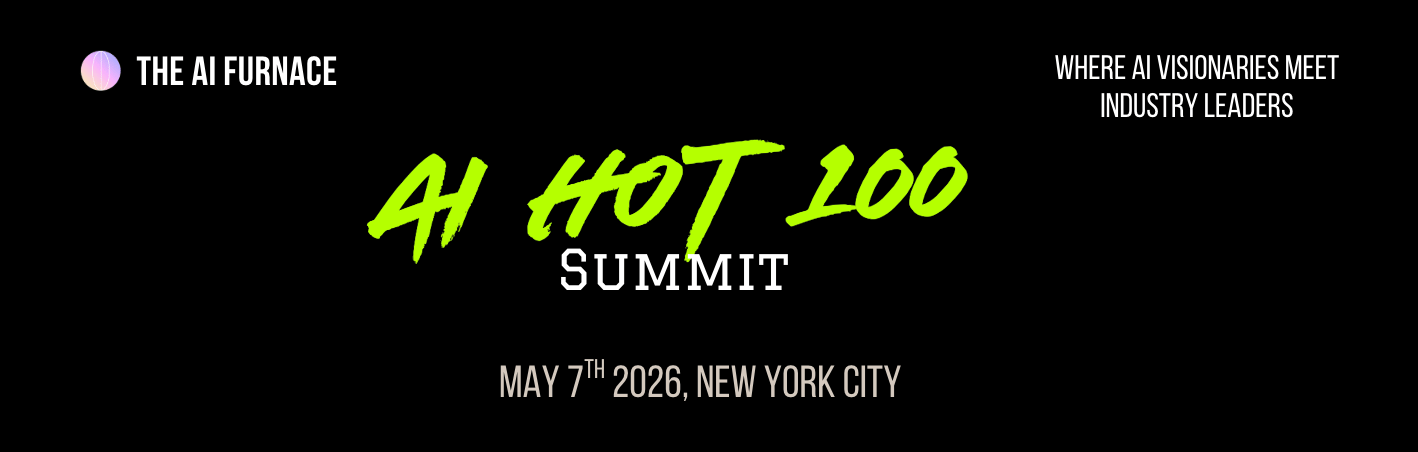
The AI Hot 100 Summit is back for its third edition on May 7th, 2026 in New York City. The only AI Summit built for real connections where AI Visionaries meet Industry Leaders. Join over 500 AI Executive Leaders, Founders and Investors for a jam packed day of enterprise AI lightning talks, innovation showcases, and curated networking.
Get ready to meet and greet speakers and attendees from OpenAI, NVIDIA, Haleon plc, Legora, Anthropic, Cursor, Eleven Labs, Adobe, Walmart, Insight Partners & more.
🗓️ May 7, 2026
📍New York City
📢 Want to partner? Reach out to get your brand in front of 25k+ AI executives, entrepreneurs, researchers, investors, and AI leaders.