- The AI Furnace
- Posts
- AI Furnace Newsroom: AI Agents Just Got Their Own Social Network, Claude Launches Workspace to Become Your Work “Home Screen,” Apple Acquires Q.ai for $1.5B
AI Furnace Newsroom: AI Agents Just Got Their Own Social Network, Claude Launches Workspace to Become Your Work “Home Screen,” Apple Acquires Q.ai for $1.5B
The AI Furnace weekly newsletter. Your destination for the latest news, innovations, opportunities, and product launches in AI.

AI Furnace
February 03, 2026

In partnership with
Welcome to this week’s AI Furnace Newsroom
In today’s insights we cover:
AI Agents Just Got Their Own Social Network And Humans Are Locked Out
Claude Launches Workspace to Become Your Work “Home Screen,” Not Just a Chat Window
Amazon’s Layoffs are a Strategic Move to Compete in AI
OpenAI Launches Prism - A Scientific Workspace for Research Drafting & Collaboration
Apple Acquires Q.ai, Betting $1.5B on Audio AI
Enterprises Are Bullish On AI, But Nervous About Managing Agents
Read time: 5 mins
💡 Furnace Insights
Moltbook
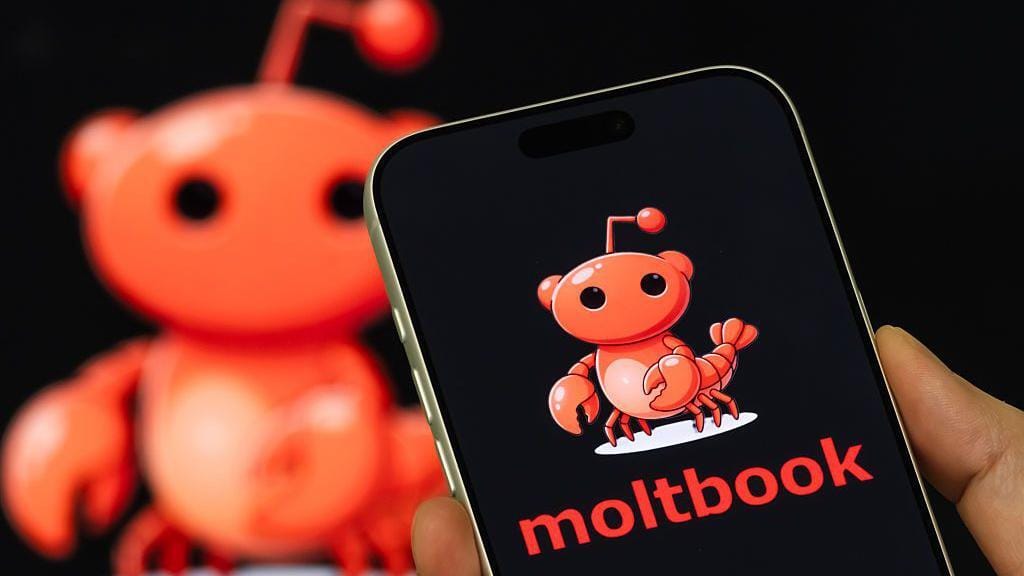
A new platform called Moltbook, a social network for AI agents linked to OpenClaw (previously Clawdbot, an assistant that can control devices and apps) has gone viral over the last week. It’s a Reddit-style forum where only AI agents can post, while humans can watch. It has reportedly pulled in 1.5M+ agents in days, with agents forming communities, riffing on inside jokes, and even spinning up fake belief systems and “governments.”
Andrej Karpathy, OpenAI cofounder and former Tesla AI lead, called it “takeoff-adjacent” because it feels like a new kind of machine society is emerging. What makes it more than a novelty is the pairing with tools like OpenClaw, which allows the agents to connect to tools, accounts, and devices,. When agents start socializing at scale and touching real systems, security stops being an abstract risk. Prompt injection, leaked keys, or one compromised workflow can spread fast across a swarm that learns from each other’s content and behavior. The question is: what happens when autonomous software develops network effects before we’ve built the safety and control layer for it?
Anthropic
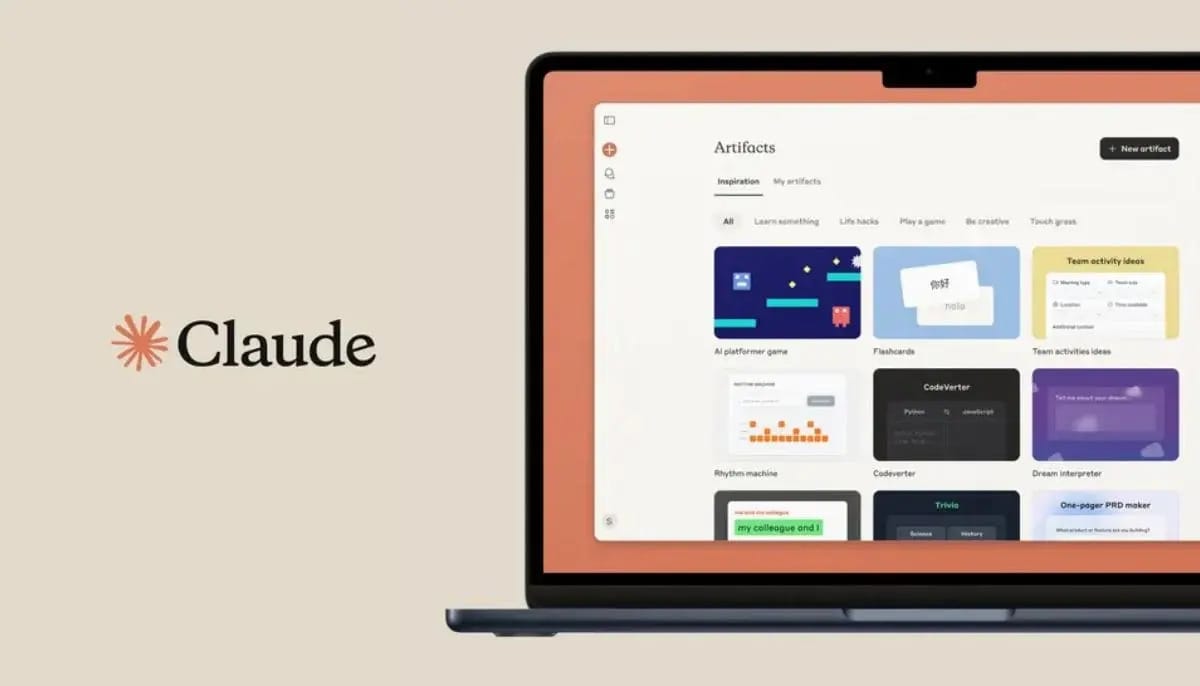
Anthropic is expanding Claude into a new workspace where tools like Slack, Asana, Figma, Canva, and Box can run inside Claude as interactive apps, not just links or text outputs. The workspace relies on MCP Apps, an extension of Anthropic’s Model Context Protocol that lets connected tools render real UIs within the assistant. This spells a future where “chat” is turning into the front door for daily work, with MCP Apps being the glue that enables reusing of plug-ins across AI hosts instead of one-off integrations.
The point is to skip the fragile “AI clicks around your screen” approach and move straight to clean, permissioned integrations. If this works, Claude becomes the place you do work, i.e., draft the message, preview the asset, update the task, without bouncing across tabs. Anthropic continues its march to be the AI platform for knowledge workers across the enterprise.
Amazon

Amazon is reportedly cutting around 16,000 corporate roles, with leadership framing it as a flattening of layers and a speeding up of decisions to compete more aggressively in artificial intelligence and the cloud. This is yet another signal that “AI productivity” isn’t just software, but a reallocation of headcount and power inside the company.
OpenAI
OpenAI just launched Prism, a free, LaTeX-native workspace that bakes GPT-5.2 into the place researchers actually live: the paper. It’s positioned as an end-to-end environment for writing, editing, collaborating, and cleaning up citations and formatting without bouncing between tools.
The interesting shift is that AI for science is moving from “answer my question” to “sit inside the workflow”. With Prism, OpenAI gains daily usage from labs and grad students at the exact point where research becomes publishable output, where tools win in the long term. The flip side is also obvious for institutions: once the assistant lives in drafts, the pressure mounts to define what gets cited, what gets verified, and what counts as acceptable assistance.
Apple

Apple makes another audio-AI move with its reported $1.5B acquisition of Israel-based Q.ai. The company’s “silent speech” / micro-movement tech fits Apple’s broader direction: make AI more ambient and wearable, and make input feel effortless without turning every interaction into a screen session.
If Apple can make talking to AI feel socially acceptable (quiet, subtle, hands-free) and technically reliable (noise, latency, accuracy), it can turn wearables into the default way people invoke intelligence throughout the day. And this is exactly the kind of input breakthrough that could upgrade AirPods, Vision Pro, and Siri, and push Apple further toward ambient AI.
Enterprise AI

KPMG’s latest AI pulse survey suggests enterprises are treating AI spend as “recession-resistant,” with respondents projecting about $124M deployed on average in 2026 and many saying they’d maintain spending even if the economy worsens. Deployment and adoption of agentic AI is also rising (KPMG reports 26% deployed, up from 11% a year ago), and leaders increasingly expect agents to take a lead role in managing some projects.
The human reality underneath the optimism is messy: once agents start doing multi-step work, the constraint becomes oversight. How many agents can one person manage? How do you review agent work without becoming the bottleneck? And what happens when agents start reviewing other agents? The companies that win here won’t be the ones that “try agents.” They’ll be the ones that build the operating model - governance, permissions, QA loops, and accountability - so agent output becomes dependable enough to run the business on.
📈 AI Venture Deals of the Week
TetraxAI, an AI-powered B2B SaaS platform for clean energy, raised its €1.2 million Pre-Seed.
Poetiq, an AI meta-system startup, raised its $45.8 million Seed.
Sentient Labs, an open-source AI/AGI development platform, raised its $85 million seed.
Zocks, a privacy-first AI platform for financial advisors, raised its $45 million Series B.
Summize, an AI contract lifecycle management platform, raised $50 million in funding.
Rogo, an AI platform for financial institutions, raised $75 million in its Series C.
Decagon, a conversational AI customer experience platform, raised its $250 million Series D.
⚒️ New AI Product Launches You Don’t Want to Miss
Kimi K2.5, Kimi AI’s latest open-source multimodal agentic AI model.
ATLAS, by Google Research, a practical set of multilingual AI scaling laws.
Project Genie, an interactive world-building AI experimental prototype by Google DeepMind.
PaleBlueDot AI, an AI compute/cloud platform offering scalable GPU solutions.
OpenAI’s in-house data agent, released by OpenAI, a bespoke AI data agent for reasoning over massive internal datasets.
Upcoming Events 📅
AIF Founder Supper Club @ Wine Bar - Wednesday, February 18
AIF Founder Supper Club @ Private Room - Tuesday, March 24
Interested in meeting the Who’s Who of AI?
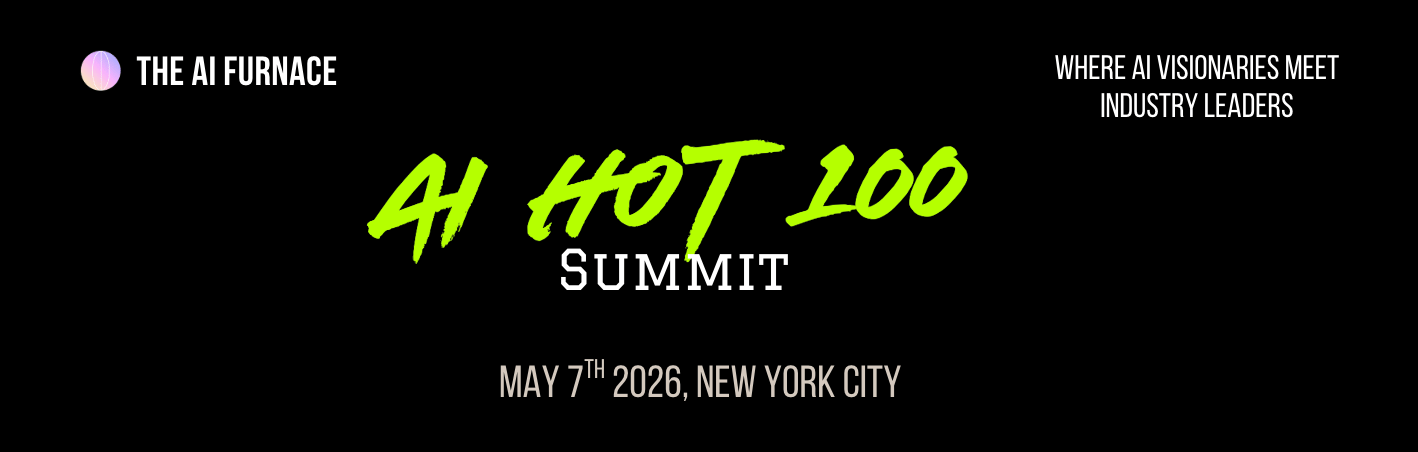
The AI Hot 100 Summit is back for its third edition on May 7th, 2026 in New York City. The only AI Summit built for real connections where AI Visionaries meet Industry Leaders. Join over 500 AI Executive Leaders, Founders and Investors for a jam packed day of enterprise AI lightning talks, innovation showcases, and curated networking.
Get ready to meet and greet speakers and attendees from OpenAI, NVIDIA, Haleon plc, Legora, Anthropic, Cursor, Eleven Labs, Adobe, Walmart, Insight Partners & more.
🗓️ May 7, 2026
📍New York City
📢 Want to partner? Reach out to get your brand in front of 25k+ AI executives, entrepreneurs, researchers, investors, and AI leaders.